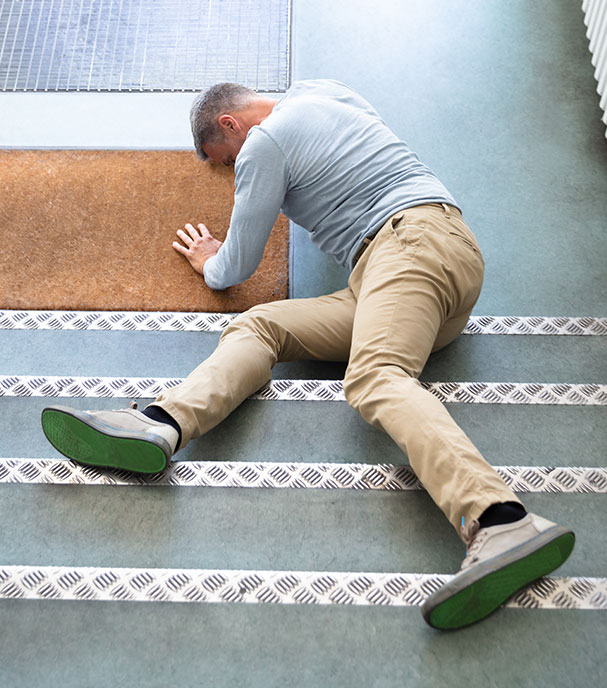
Property owners and businesses in California have a legal duty to keep their premises reasonably safe for the people who visit them. When they fail to do that — through neglected maintenance, inadequate security, or a hidden hazard they knew about and never fixed — and someone gets hurt as a result, the property owner can be held liable. This area of law covers everything from a broken stairway railing to inadequate lighting in a parking structure to negligent security at an apartment complex.
What Counts as a Premises Liability Case
- Defective stairs, railings, flooring, or elevators
- Inadequate lighting in stairwells, parking lots, or hallways
- Negligent or inadequate security leading to an assault on the property
- Swimming pool accidents
- Falling merchandise or unsecured shelving in a store
- Structural hazards like exposed wiring or unstable balconies
- Amusement or recreational equipment accidents
The Legal Standard in California
Under California Civil Code § 1714, everyone who owns, leases, occupies, or controls property has a duty to use reasonable care to keep it safe and to warn of hazards they know about (or should know about). This duty applies regardless of whether you were a customer, a guest, or even someone with a more limited reason to be on the property — the landmark case Rowland v. Christian did away with the old rules that gave lesser protection to certain categories of visitors, and instead courts look at whether the property owner acted reasonably given the foreseeable risk of harm. To win a premises liability claim, you generally need to show: the defendant owned, leased, occupied, or controlled the property; the defendant was negligent in the use or maintenance of the property; you were harmed; and the defendant’s negligence was a substantial factor in causing that harm.
Frequently Asked Questions
What’s the difference between premises liability and a slip and fall claim? Slip and fall claims are one specific type of premises liability case — injuries caused by a hazardous walking surface. Premises liability more broadly covers any injury caused by a dangerous property condition, from inadequate security to a defective structure. Do I have a case if I was hurt at an apartment complex I don’t live in? Yes, potentially. Property owners owe a duty of reasonable care to guests and visitors, not just tenants or customers. How long do I have to file a premises liability claim in California? Generally two years from the date of the injury, under Code of Civil Procedure § 335.1. Claims against government-owned property have a much shorter deadline — generally six months. What does it cost to hire a premises liability lawyer? We work on contingency: no fee unless we win. If you or a loved one has been injured due to a hazardous property condition in Los Angeles or anywhere in California, contact The Law Office of Joshua P. Koshki for a free consultation. Free consultation. No fee unless we win.
Serving These California Communities
We help injury victims throughout the Los Angeles area and across California, including: